The iconic Honda Africa Twin adventure bike enters a new era in 2027 with increased displacement, a third model variant, and Honda’s most advanced rider-assistance technology yet.
For many adventure riders, the Honda Africa Twin has long occupied a sweet spot between off-road capability and long-distance touring comfort. Since its modern revival in 2016, the platform has earned a reputation as one of the most versatile motorcycles in the ADV segment, capable of tackling everything from daily commuting to transcontinental expeditions.
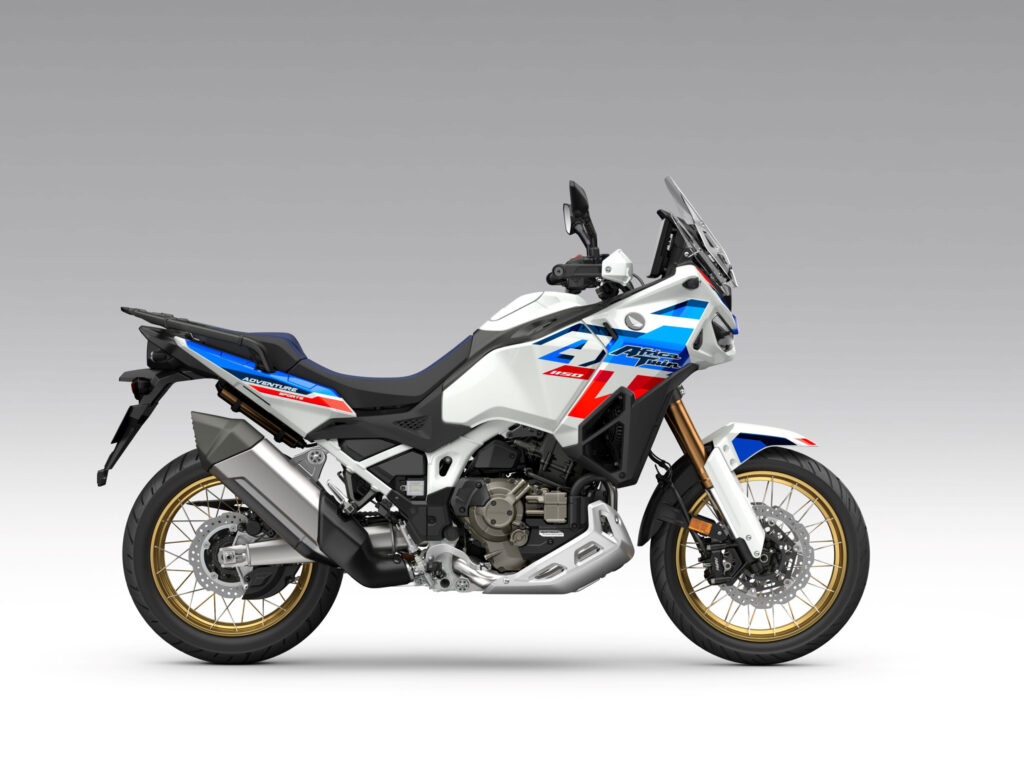
Now, after 10 years of evolution, Honda is taking its flagship adventure platform in a bold new direction. At EICMA 2026 in Milan, the company unveiled the CRF1150L Africa Twin Series. It represents a comprehensive redesign of its large-displacement adventure motorcycle lineup.
The update isn’t simply an engine refresh or styling exercise. Instead, Honda has fundamentally rethought how the Africa Twin lineup serves different riders, introducing a three-model strategy. These motorcycles targets distinct adventure riding styles while simultaneously pushing deeper into safety/rider tech and sustainability.
One Africa Twin, 3 Different Riders
Perhaps the most significant change, is the expansion of the lineup itself.
The new range includes the standard CRF1150L Africa Twin, the touring-focused Africa Twin Adventure Sports, and an entirely new variant called the Africa Twin Enduro Sports. That third model is particularly noteworthy.
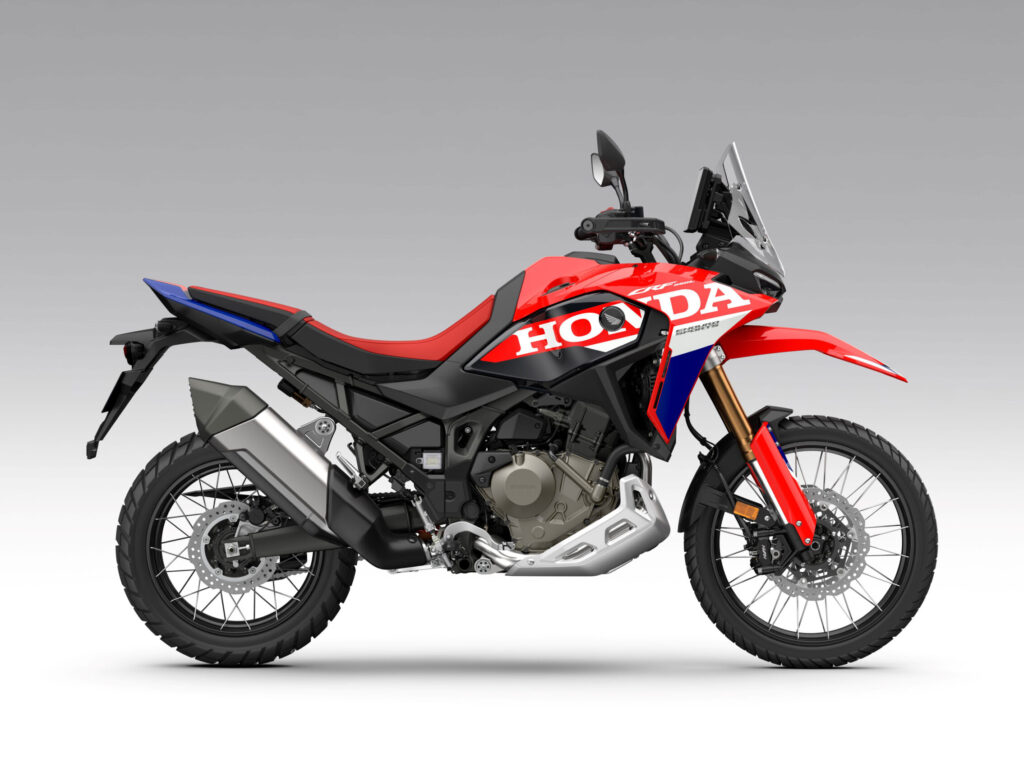
While manufacturers have increasingly stretched the definition of “adventure motorcycle” toward larger, more road-oriented machines, Honda appears to be acknowledging that a decent portion of the ADV community still prioritizes dirt performance.
The Enduro Sports model draws inspiration from the CRF450 RALLY, Honda’s Dakar-proven competition platform. It incorporates rally-derived suspension and distinct styling aimed at riders who spend more time off pavement.
For overlanders who regularly hit the road less traveled, the addition suggests Honda sees continued demand for genuinely capable off-road adventure bikes instead of purely touring-focused machines.
More Power Without Losing the Plot
At the heart of the redesign sits a larger 1,131cc parallel-twin engine, replacing the previous-generation powerplant and delivering 117 hp and 87.8 lb.-ft., up 16 hp and 4.8 lb.-ft. of torque. Honda attributes the performance increase to greater displacement, revised intake and exhaust systems, updated gearing, and changes to the engine’s bore and compression ratio.
Yet perhaps more interesting than the power increase itself is Honda’s simultaneous focus on weight reduction.
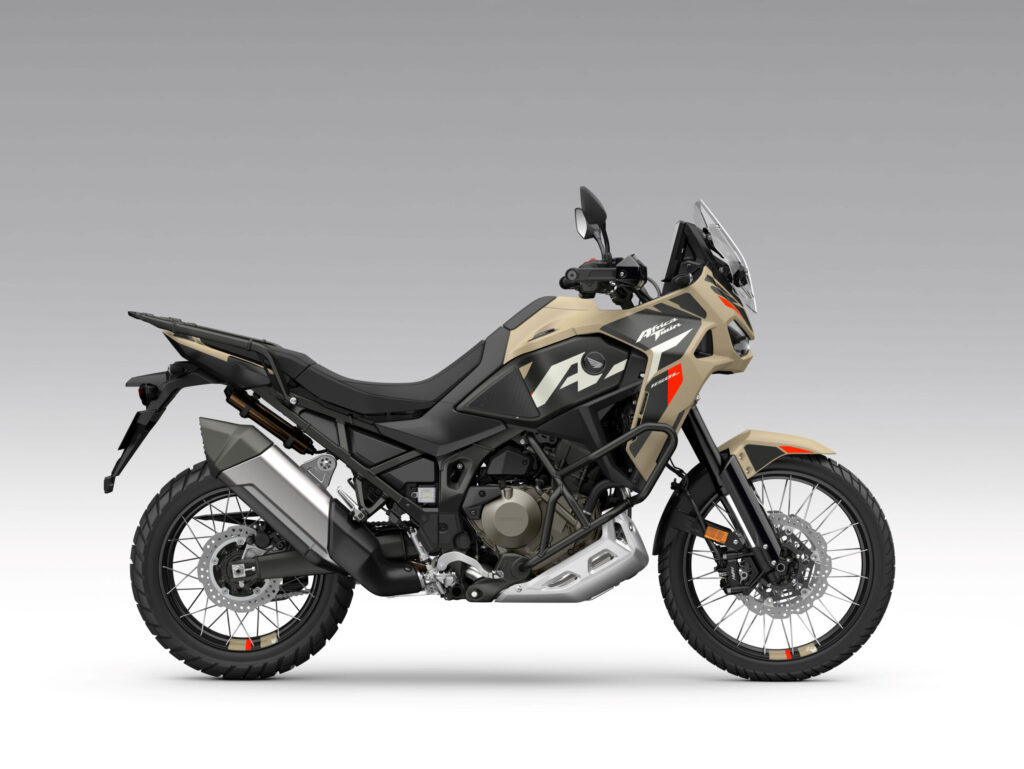
Engineers redesigned the frame and swingarm, trimming approximately three pounds while revising rigidity characteristics to improve handling. The company also relocated portions of the fuel system lower in the chassis, helping create a lower center of gravity.
For riders who have wrestled fully loaded ADV bikes through rocky trails or technical terrain, those changes may prove more valuable than additional horsepower.
The challenge for every manufacturer in this category is balancing highway competence with off-road manageability. Honda’s approach suggests an understanding that capability is not simply about making bikes bigger or more powerful.
Honda SENSING RIDE Has Arrived
The headline-grabbing feature is undoubtedly the debut of Honda SENSING RIDE. It’s the company’s new radar-based rider-assistance system. Available on the Africa Twin Adventure Sports DCT, the new feature marks the first motorcycle application of the technology.
Using front and rear millimeter-wave radar sensors, Honda introduces a suite of new features increasingly common in automobiles but still relatively new to motorcycles. These include:
- Adaptive Cruise Control
- Stop-and-Go functionality
- Forward Collision Warning
- Emergency Brake Assist
- Blind Spot Information
- Rear Collision Warning
- Distance management assistance
- Group Ride Assist features
For the overlanding community, reactions will likely be mixed.
Some riders embrace these technological advancements that reduce fatigue on long highway transfers between trails, campsites, or event destinations. Others view electronic intervention as unnecessary complexity on machines intended to operate far from dealer networks and service centers.
Either way, Honda’s move shows us where the adventure motorcycle market is heading. As premium ADV bikes continue to absorb technology from the automotive sector, radar-assisted riding systems may soon become as common as ride modes and traction control.
Building a Better Long-Distance Motorcycle
The new Adventure Sports model continues to target riders who prioritize covering miles. A 24-liter fuel tank, 19-inch front wheel configuration, larger windscreen, electronically adjustable suspension, and long-distance comfort enhancements reinforce its role as the continent-crossing option within the lineup.
Meanwhile, all three Africa Twin models feature multiple integrated riding modes that adjust engine performance, traction control, ABS, dual-clutch transmission behavior, and suspension settings to match changing terrain and conditions. For riders who regularly transition from interstate highways to gravel roads and technical two-track within the same trip, this kind of adaptability has become a defining characteristic of the modern adventure motorcycle.
Sustainability Reaches the ADV Segment
One aspect of the announcement that may receive less attention is Honda’s continued push toward sustainable materials.
The new Africa Twin series incorporates chemically recycled acrylic and nylon materials, plant-based DURABIO bioengineering plastics, recycled polypropylene components, and other recovered materials throughout. Honda says the initiative supports its broader goal of achieving 100 percent sustainable material use by 2050.
While sustainability announcements can feel disconnected from enthusiast products, their inclusion on a flagship adventure platform suggests Honda increasingly views environmental responsibility as part of long-term product development rather than a separate initiative.
Why This Matters to Overlanders
The Africa Twin has always occupied an important position within the adv riding ecosystem. It offers enough off-road capability to explore remote terrain while maintaining the comfort and reliability required for extended travel.
What’s most significant about this redesign is that Honda isn’t forcing riders into a single interpretation of adventure travel. The company now offers a lineup that ranges from a rally-inspired machine aimed at aggressive off-road exploration to a technology-rich tourer built for crossing countries in comfort. Between them sits the standard Africa Twin, continuing its role as a versatile all-around ADV platform.
In many ways, the new Africa Twin reflects the evolution of overlanding itself. Today’s adventure travelers aren’t all looking for the same experience. Some prioritize remote backcountry routes, others focus on long-distance touring, and many want a machine capable of both.
Honda’s answer is simple: build an Africa Twin for each of them.