
After the launch trip through Colorado, Utah, and Arizona for Overland Expo WEST in May, I was itching to get this year’s Overland Expo Ultimate Vehicle Build into the backcountry of my home state of Washington as we made the journey south to Overland Expo PNW.
When you’re building out a truck like this, you can’t just rely on manufacturer spec sheets and marketing hype; you need to get it into the dirt and see how all the components work together. So Chad and Skinny from Alldogs Offroad Coop and I hit the Little Naches area in the Washington Cascades to put the 2026 Nissan Frontier PRO-4X to the test on the type of terrain it was built for: tight, rocky trails flanked by immovable trees and huge boulders, exposed tree roots, washouts, and loose shale ledge roads. It’s a perfect proving ground for the modifications we made to the truck.
Airing Down at the Little Naches Trailhead
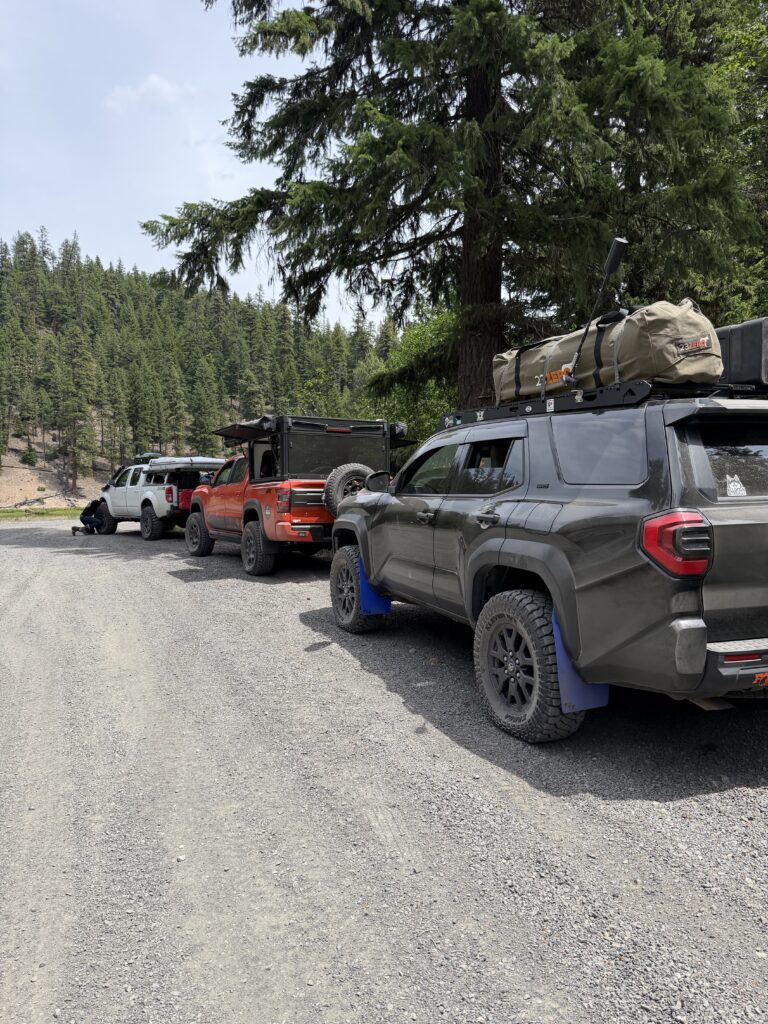
Before we hit the trails, we pulled off the side of the forest road and lowered our tire pressure from highway pressure (36 psi) to 15 psi. It’s an easy and often overlooked step that makes your trail drives far more comfortable.
Using the ARB E-Z Deflator is second nature at this point, but the process is simple: remove the valve cap, thread the deflator onto your valve stem, use the slotted plunger to find the valve core and back it out. Then you can control the deflation by pulling the brass collar back and releasing the air while monitoring the gauge in real time until you hit your desired pressure.
READ MORE: Get Educated and Inspired to Adventure at Overland Expo Mountain West
Dropping pressure flattens the tire’s footprint, giving it a wider contact patch to grab onto loose rock and dirt. As the sidewall deforms, it acts as a cushion, soaking up the washboards and rocky sections without creating tire spin and eventual erosion of the trail. It is up to us to protect our public lands, and this is one of the best ways to do that.
Ground Contact: Suspension, Tires, and Wheels
The first test came as we started climbing the steep single-track grades. The trails were a typical PNW mix of loose, rocky surfaces, washouts, and exposed rock and roots.
Weight is the enemy on an overland build once you throw a camper and gear in the back. To handle the loads without sacrificing capability, we ran the Alldogs Offroad Coop (ADO) Titan Swap Kit in the front with ADO Parabolic Leaf Packs in the rear as well as FOX Performance Elite 2.5 Reservoir Shocks with Dual Speed Compression adjusters.
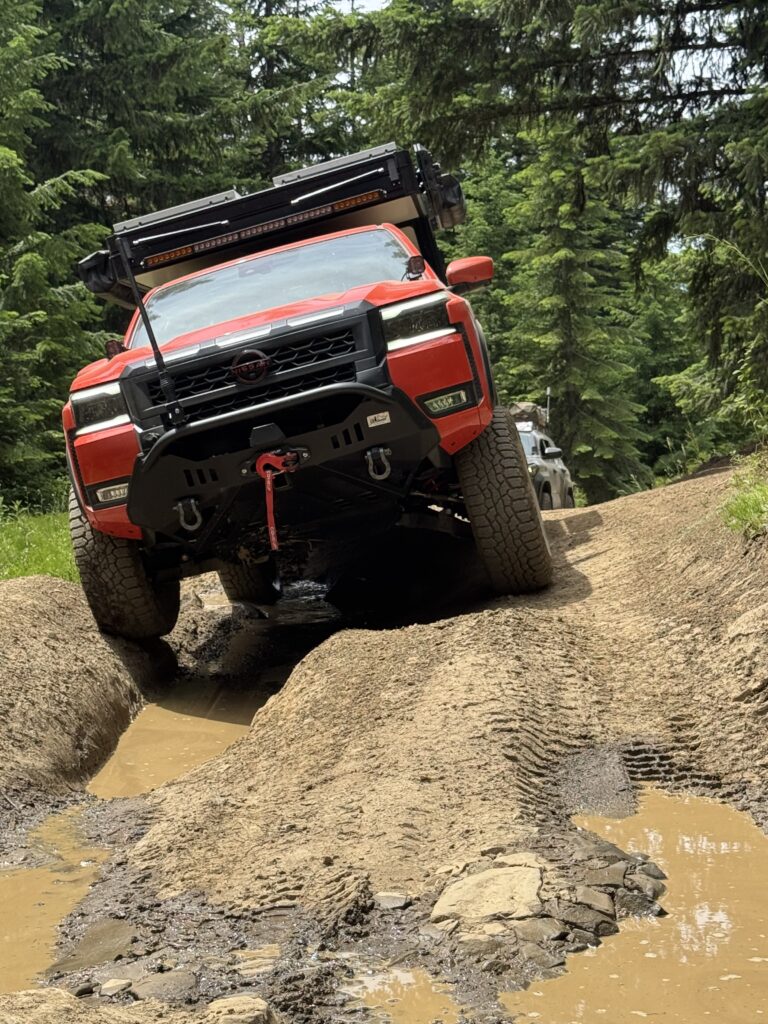
The ADO Kit uses the geometry from full-size Nissan Titan upper and lower control arms – which share the same bolt pattern with the Frontier, X-Terra and some models of the Pathfinder – as well as extended CVs and cabling to push the track width out three inches on each side. This kit nearly doubles front wheel travel to around 10 inches, making it a true long-travel suspension for a fraction of the cost.
The oversized FOX shock bodies hold more fluid and prevent shock fade over hours of driving. We were able to dial in the compression to eliminate any body roll from the camper weight while softening quick compression to soak up washboards and any heavy hits.
As a result, the Frontier PRO-4X stayed planted on the off-camber climbs and descents. Allowing the tires to hold traction without wheel lift.
The Black Rhino TEMBO wheels feature a heavy-duty load rating engineered for overland vehicle weights and feature Black Rhino’s Bead Retention System so we could air down with confidence. Wrapped around them, the Nokian Outpost nATs proved their worth on the trail. Their Kevlar/Aramid-reinforced sidewalls provided puncture resistance against sharp granite and shale, while the aggressive tread blocks dug into loose dirt without loading up with mud or rocks. They were comfortable both on-road and off with a minimum of noise.
The protection offered by the steel NISMO Rock Sliders made me feel comfortable while flexed out over large rocks in the trail, knowing that the bottom panels of the truck were protected in case I scraped. I also like the way the sliders “finish” the bottom of the rig by enhancing the body lines of the truck.
Trail Communication and Lighting
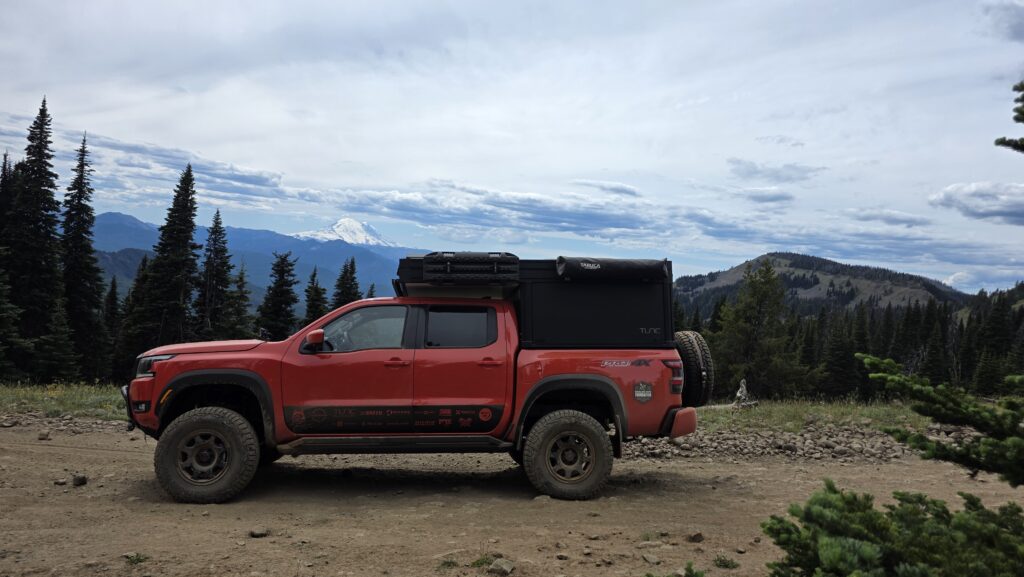
As we made our final push that afternoon into an undisclosed location for camp, we dropped off the grid and cell service ended. We remained on comms with the Midland Radio Micromobile System to call out hidden turns, oncoming traffic, and obstacles. We also used it for a bit of banter on the long drives. Comms are so important, not only for safety, but for fun too.
These Forest Service roads are narrow, heavily wooded, and DUSTY. We were constantly dealing with dark sections of the trail opening up to bright sunlight, making it difficult to pick out ledges and washouts. I ran the Diode Dynamics SS3 Ditch Lights on these sections, or when it was too dark for those, I’d hit the D-Link switch for the Diode Dynamics SS50 Light Bar and turn darkness into daylight. The chase lights in the rear bumper came in handy for the group following me as I kicked up massive dust clouds that made it difficult for anyone following me to see ten feet in front of them.
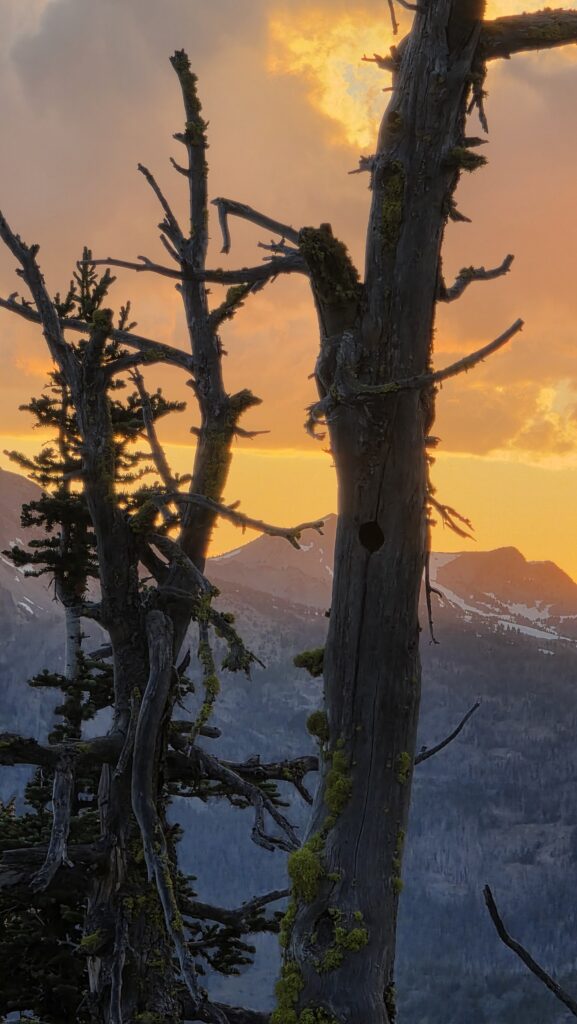
The lighting and comms helped us hit our camp spot on a ridge overlooking Mount Adams and Mount Rainier safely and well before dark so we could experience a spectacular sunset over the Cascades.
Airing Up & The WABDR from Packwood to the Oregon Border
The next day, we dropped into Packwood for fuel before picking up Section 1 of the WA Backcountry Discovery Route (WABDR) toward the Oregon state line.
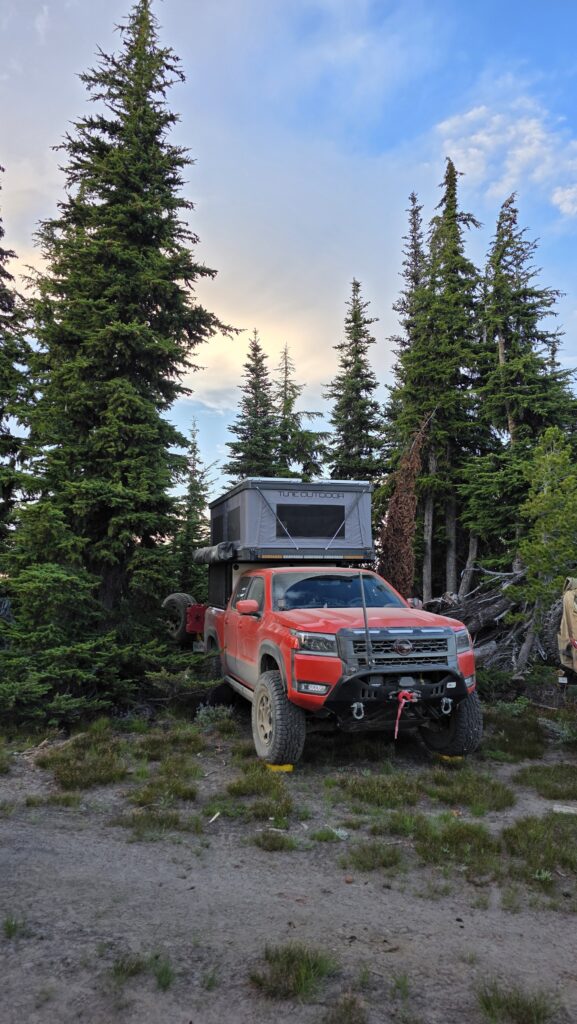
Before hitting the highway, we pulled off to air up using the onboard ARB Twin Brushless Air Compressor, which made short work of filling the tires. Having a fixed compressor hard-mounted in the bed means we didn’t have to dig through packed gear boxes to find a portable pump or wrestle with alligator clips on the battery; just plug in the hose, fill the tires, and hit the road.
WABDR Section 1 gave us a little bit of everything: long mountain climbs, fast gravel double-track, and some rolling off-camber sections. Hammering up the steep mountain passes, the Borla Exhaust gave the V6 an aggressive growl outside without creating any annoying cabin drone inside. Hill climbs were easier because the engine didn’t need to work as hard, as the exhaust reduces engine backpressure, giving you more power when you need it.
The Verdict After 500+ Miles
This trip was a mix of pavement, gravel forest service roads, unique, off-camber obstacles, and high mountain passes. The Nissan Frontier PRO-4X remained a capable platform with our modifications, and the build partners highlighted in this report made the vehicle inherently better. The truck handled the weight of the camper with ease; the thoughtful suspension mods and running gear made it easy to pick lines through tight trails and provided comfort for long hauls on pavement.
It’s always fun when planning, theory, and muscle come together into a finished build, and I’d say we knocked it out of the park with this rig. Whoever wins the Bring a Trailer auction in the fall is going to receive an amazing vehicle that is ready for anything.