Sarah and Cameron, aka @homeonthetrails, are a husband-and-wife team based in Fraser, Colorado, but they spend plenty of time on the road exploring in their truck. While exploring all across the US and internationally, they stay busy skiing, biking, diving, and more. They’re great folks, with a truck to match (more on that soon), and they’re part of the Overland Expo team that’s integral to the events. Read on to learn more about this amazing couple, and we guarantee you’ll be inspired.
OE: The two of you spend a lot of time on the road. Can you tell about your rig?
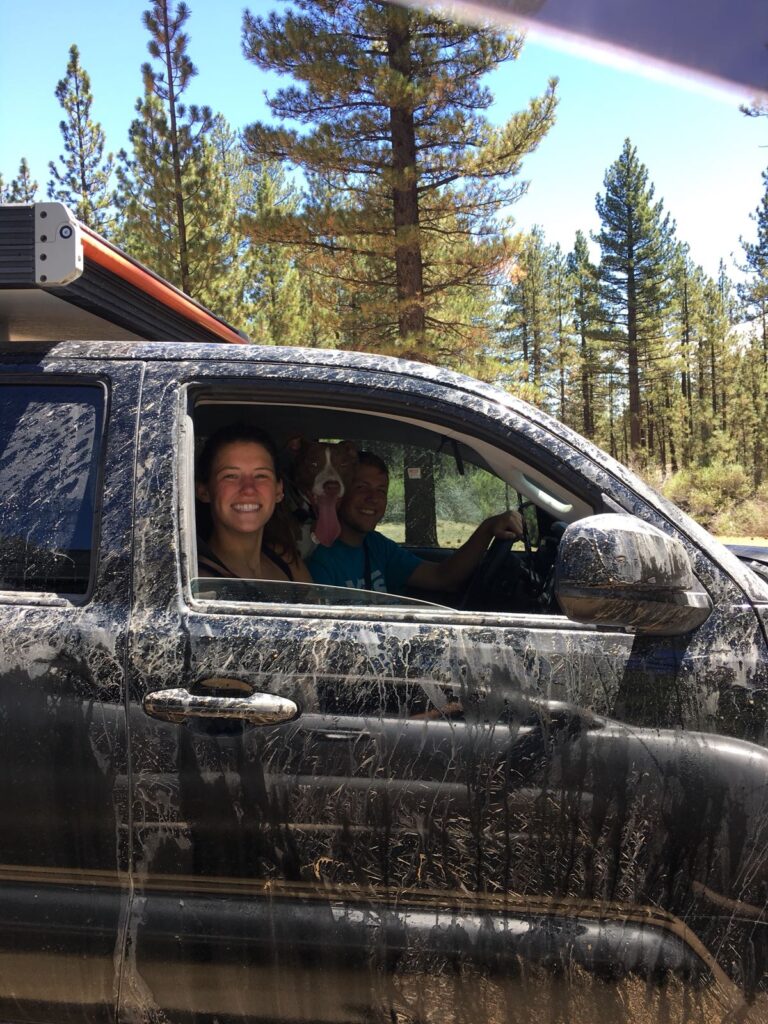
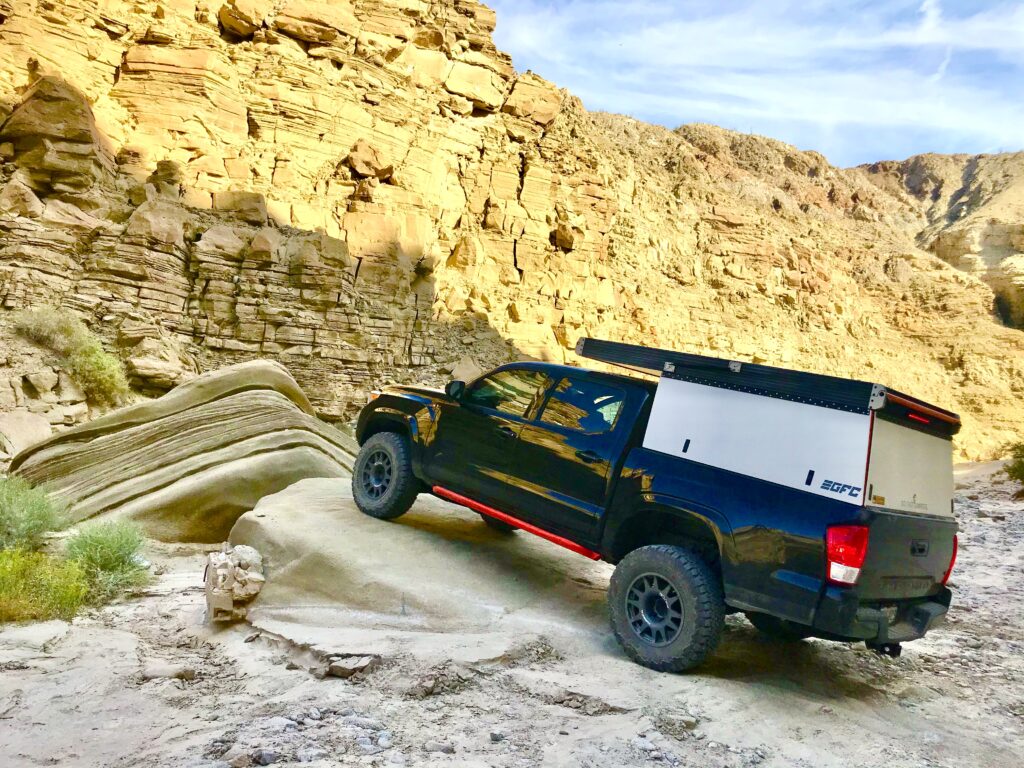
S&C: Our baby and the vehicle that’s truly shaped our overlanding lifestyle is our 2017 Toyota Tacoma topped with one of the original Go Fast Campers.
Back in January 2018, we put down a deposit on a prototype GFC camper and ended up receiving camper number 17 in May of that year. We’ve been building and refining the setup ever since.
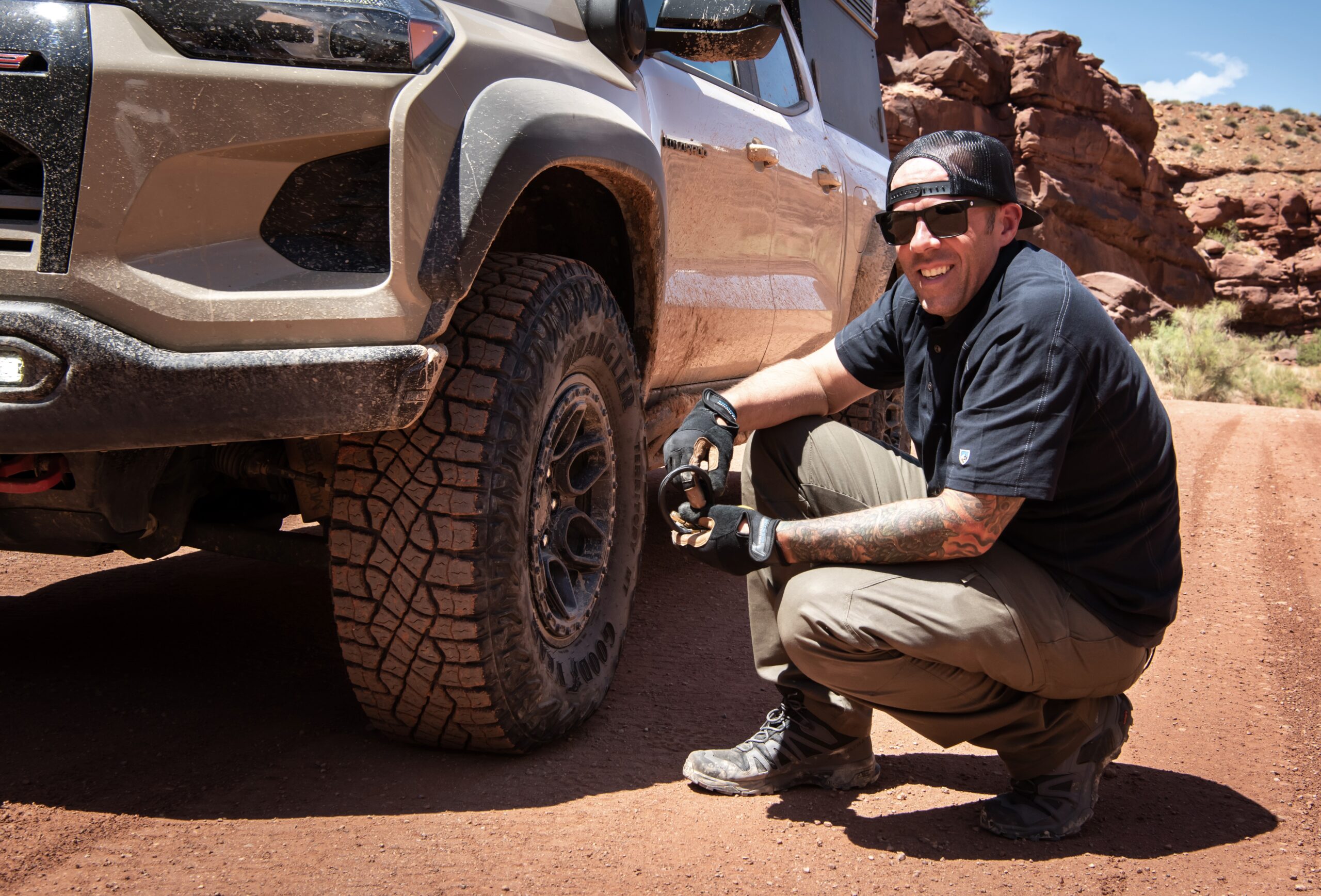
Our current setup includes a 2.5-inch lift kit from Bilstein, Tembrin bump stops, Total Chaos UCAs, PowerStop rotors, Deaver Heavy Leaf Springs, 16” EVO course wheels with BFG KO3 295s, a steel RCI skid plate, custom-made steel rock sliders, yellow top OPTIMA batteries powering our BlueSea Fuse box to run our accessories such as the fridge and power station in the bed of the truck. As for cooking, we have a 5-pound propane tank mounted on the GFC and a Coleman stovetop. A diesel heater is located inside the camper for those Rocky Mountain nights.
Because we both work remotely, connectivity has always been a major focus for us. Like many overlanders, we’ve experimented with just about every cell booster and internet solution available. We started with multiple generations of WeBoost systems and eventually upgraded to Starlink, which has been a game-changer for working on the road.
One of our most recent upgrades came just before heading to Arizona this year. Cameron and a few friends welded a new, more aggressive off-road hitch setup so we could carry two bikes while still fully opening the tailgate. At this point, many of our upgrades revolve around improving accessibility and efficiency. After years of traveling, we’ve learned that easy access to gear and a functional camp setup often matters more than adding more equipment.
During the height of COVID in 2020, we took the opportunity to completely build out the truck bed ourselves. We installed a 13-gallon water system, countertop, sink with running water, fridge/freezer, charging station, dual batteries, solar capabilities, insulation, flooring, and a bench with cushions that doubles as a comfortable place to relax at camp.
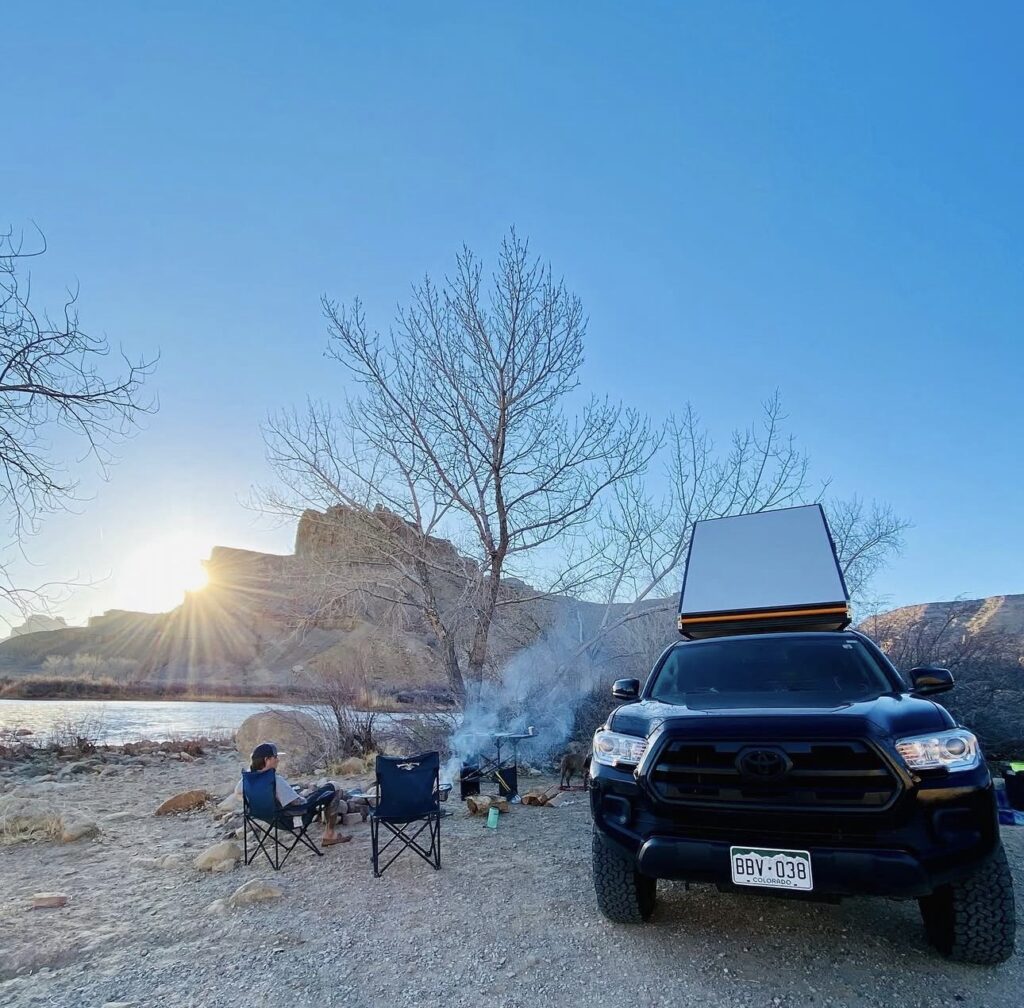
What we love most about the Tacoma and GFC combination is its simplicity. It’s taken us across Baja, through countless national parks, deep into the Colorado backcountry, and has served as our home for stretches of up to six months at a time. It’s not the biggest or fanciest setup at Overland Expo, but it’s been built around how we actually travel—and after all these years, it still feels like home.
READ MORE: Rad Women, Real Rigs: Women Are Reshaping Overlanding
OE: It’s a great truck! What initially led you to begin overlanding?
S&C: Honestly, it started with our love of road trips and adventure. Sarah came to Colorado for what was supposed to be a three-week visit in 2015, met Cameron, and decided to stay. Not long after, we took our first two-week road trip together through the southern United States on our way to Florida. Since then, we’ve been hitting the road whenever we can.
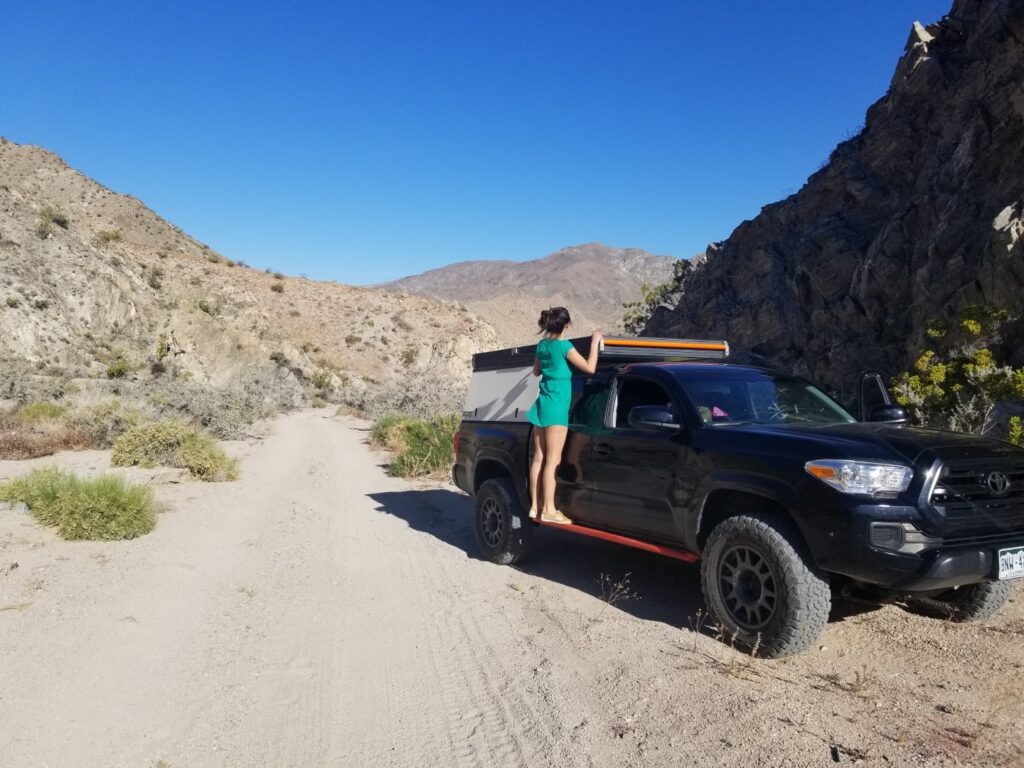
As our travels grew, so did our interest in exploring places beyond paved roads. Over the years, we’ve taken our Tacoma through some incredible areas, including Baja, Mexico, Engineer Pass in Colorado, Anza-Borrego Desert State Park, Death Valley, Holcomb Valley, Mojave Desert, Moab, taken the back roads into Joshua Tree National Park and Bryce Canyon, US-1 California, and many other trails throughout the West. Every trip taught us something new and pushed us to continue exploring farther from home.
What started as road tripping eventually evolved into overlanding, and now it’s become a major part of how we travel and experience the world. One of our biggest goals in life is to eventually complete the Pan-Am trail.
OE: How did you initially become involved in Overland Expo?
S&C: As overlanders and outdoor enthusiasts, Overland Expo had always been on our radar. When the Loveland event came around in 2021, we knew it was something we wanted to be a part of. We reached out about volunteer opportunities and were thrilled to be accepted. We volunteered at the Loveland event for our first two years before being invited to join the staff team.
Since then, we’ve attended Loveland four times and were excited to finally make it to Flagstaff, Arizona, to work the 2026 event. One of our favorite parts of Overland Expo is the people. From the staff to the attendees, we’ve met so many passionate travelers, adventurers, and outdoor enthusiasts.
Every year we leave feeling inspired to travel farther, explore more, and come home with new ideas for our rig and future adventures. Overland Expo has become much more than an event for us—it’s a community we’re grateful to be a part of.
OE: And, how have you seen it change over the years?
S&C: One of the biggest changes we’ve noticed over the years is how much Overland Expo continues to grow while still maintaining its strong sense of community. Each year, there seem to be more vendors, more educational opportunities, and more innovative products and rigs to explore, which keeps the experience exciting for both attendees and staff.
We’ve also seen continual improvements to the staff experience. The staff camping area has improved every year, and we really appreciate that the Overland Expo team actively listens to feedback and considers the needs of the people working behind the scenes. It’s clear that they value their staff and want everyone to have a positive experience. Another thing we’ve appreciated is how connected and involved the staff remains as the event grows. Despite the larger crowds and expanding footprint, there’s still a strong sense of teamwork and community. We always feel welcomed, supported, and included, which is one of the reasons we keep coming back year after year.
OE: We’re happy to hear that! We couldn’t do it without such a great team and the community at large. We try to improve everyone’s experience event after event, year after year. You both have an incredible amount of overlanding experience; if you could give one piece of advice to someone just starting, what would it be?
S&C: Just start somewhere.
When we first began camping together, all of our gear fit inside a single plastic storage bin. We didn’t have a built-out truck, fancy equipment, or a perfect setup. We had a tent, a few basic supplies, and a desire to get outside.
Over the years, we’ve definitely accumulated more gear than we ever imagined, but we’ve learned that the gear isn’t what matters most. The best way to learn is by getting out there and figuring out what works for you.
Don’t wait until your vehicle is perfect or you have every gadget. Start with what you have, take a weekend trip, and build from there. At the end of the day, overlanding is really about connecting with nature, exploring new places, and creating experiences you’ll remember for the rest of your life.