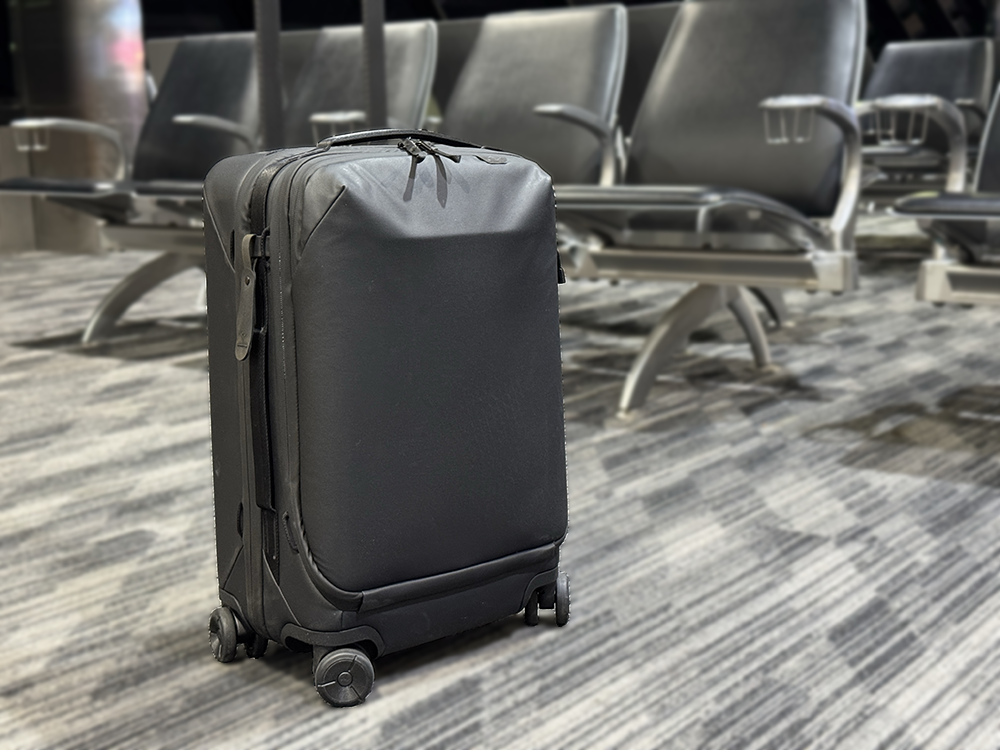
Quick Take: The Peak Design Roller Pro is a unique take on the classic roller bag that leverages Peak Design’s broad range of packing cubes, camera cubes, and accessory bags which makes it a great fit for those with a broad range of travel needs. It is a pleasure to use, has held up well to abuse, and has a contemporary, minimalist aesthetic that stands out in a sea of competitors.
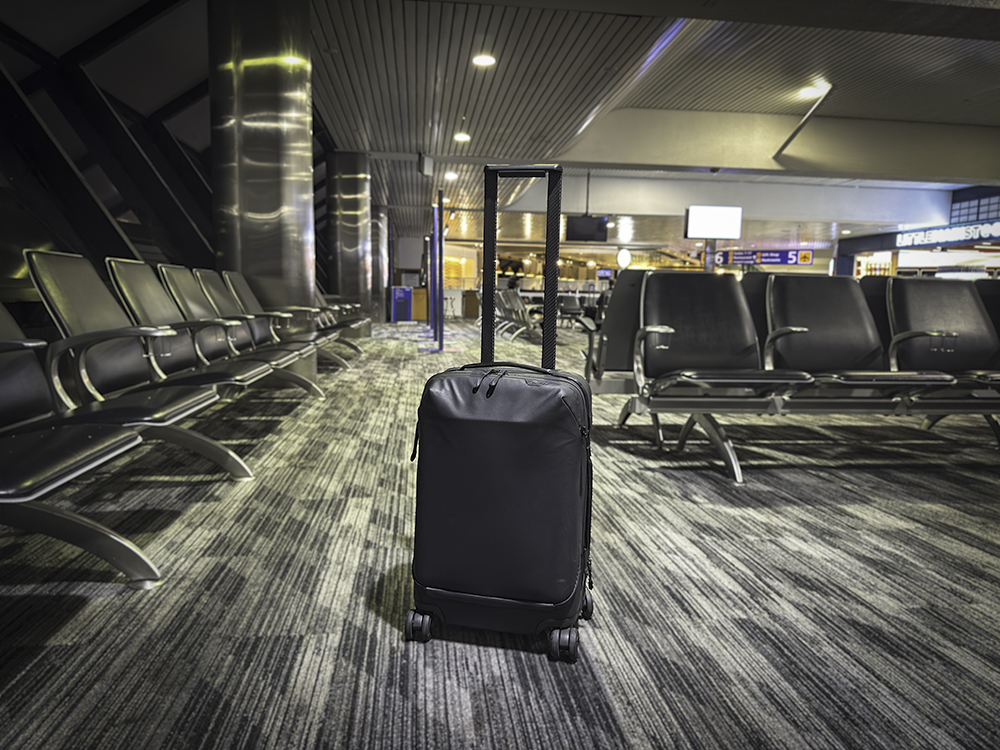
So…it turns out I have a bit of a problem with collecting travel and adventure-oriented bags. By last count, I had 37 of them, comprising duffels, totes, roller bags, suit carriers, laptop slings, laptop backpacks, camera bags, hiking bags, backpacking bags, and travel backpacks. They take up a ton of space, I’ve spent a king’s ransom on them over the years, and it is quite inconvenient to juggle gear between bags when I need to go somewhere. As an antidote, I did what any rational person would do and got another bag.
I found Peak Design a couple of years ago when some of my photography friends started showing up with their gear to photo outings. I’ve picked up a couple of their smaller organizational bags since. I’m especially a big fan of their Tech Pouch, which I have been carrying daily for a number of years now. When they announced a Kickstarter for a new roller bag last year, I thought it just might be half of a two-bag strategy that could replace 90% of my “collection” and free up some much-needed storage space. Watching their release video and the stream of pre-order influencer videos that followed, I was intrigued by the unique look of it, the blank slate redesign of the ubiquitous roller bag, their claim of designing 154 custom parts for the luggage (and only using one off the shelf part in the process), and its integration into their packing cube and camera cube system that works across their varied and growing collection of travel bags.
So here I am with the Roller Pro, a couple of their packing cubes, and two of their camera cubes added to the collection. Since getting the bag about six months ago, I’ve used it for more than 100 nights of travel encompassing about two dozen domestic and international flights, road trips, business travel, family trips, and yes, overlanding. Aside from my ever-present laptop backpack and an occasional suit carrier, this is the only piece of luggage I’ve allowed myself to use in that time.
Exterior
The Roller Pro is built around a polycarbonate interior shell that gives it most of the rigidity and protection of a hardshell design, but is wrapped in a slightly padded, proprietary fabric that provides some give to the bag that allows it to be compressed slightly before being limited by its rigid shell. I’ve long appreciated the durability benefits of hard-sided luggage, but always lamented how quickly they get beaten up by travel, their frequent lack of expansion, and their total inability to be compressed when they don’t quite fit where they need to go. This hybrid design addresses these shortcomings while still offering protection for its contents. This may not be too important when the only thing inside is your shorts and t-shirts for a summer trip, but it becomes critically important when traveling with expensive camera gear or fragile tech we’ve all been increasingly bringing with us.
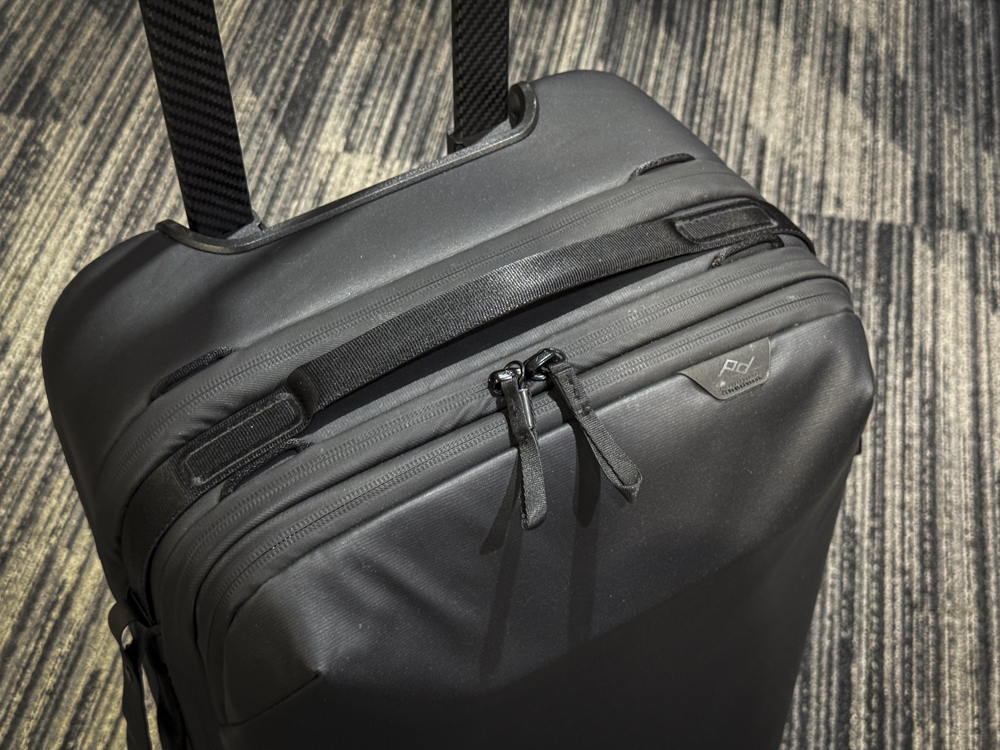
The exterior shell is a proprietary take on a 500D nylon material Peak Design has dubbed Versa Shell. Available in black, “sage” green, and “eclipse” (a shade of maroon), the material has held up very well to a lot of travel and some rather notable abuse at the hands of a well-known budget airline. The black colorway I opted for tends to pick up dirt and other marks over the course of a long trip, but a quick wipe down with a damp towel sets it back to looking new.
READ MORE: Community Spotlight: Nolen Yapp of Classic Overland
In addition to the Versa Shell, Peak Design also chose to use their own proprietary zippers, which they call UltraZips. I was initially worried about their deviation from the gold-standard YK hardware used nearly universally in higher-end gear. Zippers are the element that ultimately makes or breaks a bag – quite literally. Thankfully, the UltraZips have been flawless so far. They move very smoothly and haven’t shown any sign of coming up short of the YK alternative. Combined with the waterproof exterior material, the zippers have managed to keep everything dry inside, even during a torrential downpour.
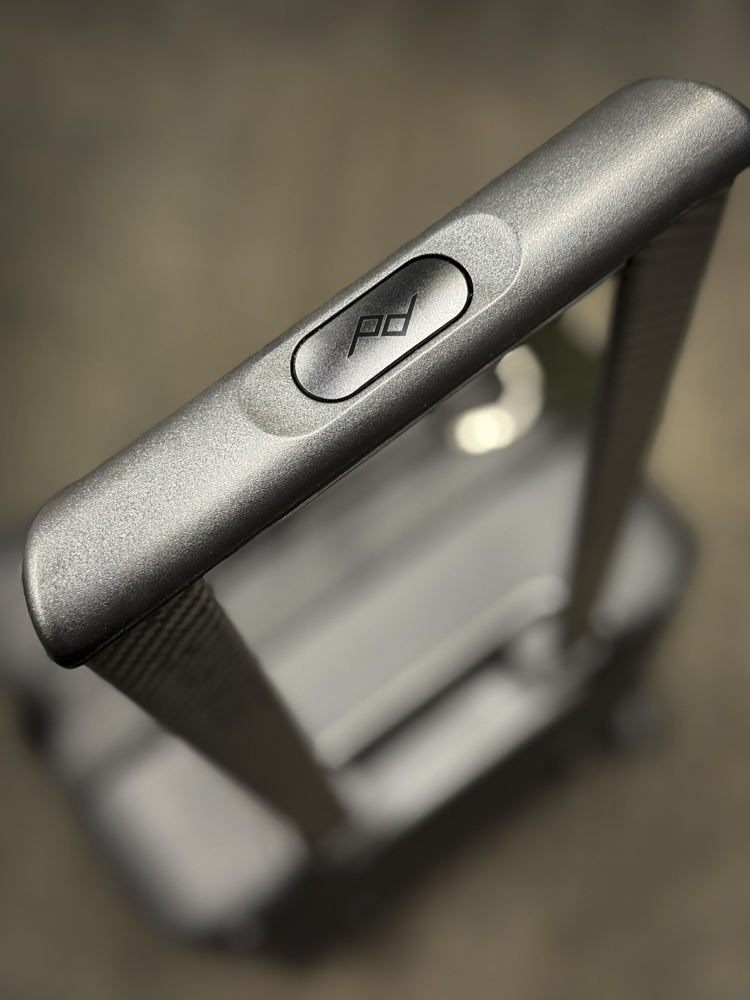
Perhaps the most visually notable component of the bag is the telescoping trolley handle. Instead of the usual aluminum wobble wands we are all used to, the bag’s two extending arms are made of single pieces of 3K carbon fiber that are lightweight, rigid, and only 7mm thick. They ride within a machined aluminum chassis that ensures smooth extension and retraction and exudes that oh-my-gosh-this-is-so-much-better-than-I’m-used-to thing that pervades much of the rest of the design. The handle itself is nicely sculpted, albeit made of ABS, and has an anodized aluminum button for adjusting the extension of the handle. At six feet tall, I found the taller 100cm extension about perfect. Someone notably taller may find the upper limit a little low. One of the advantages of the carbon fiber trolley extensions is that they take up very little room inside the suitcase, creating a nearly flat interior and maximizing interior space.
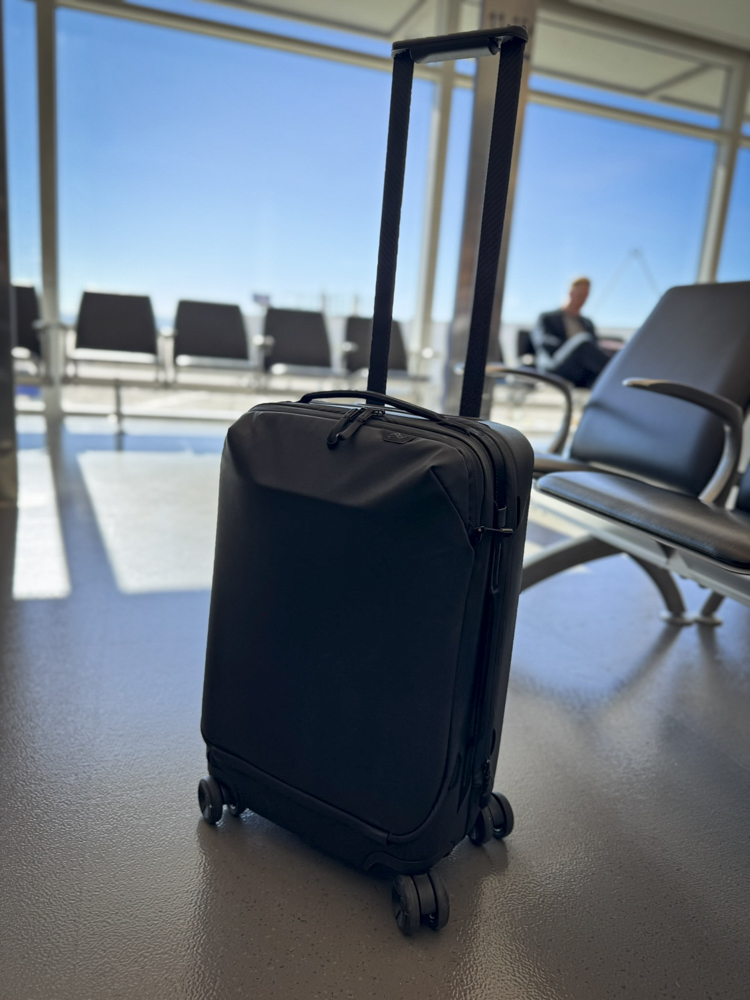
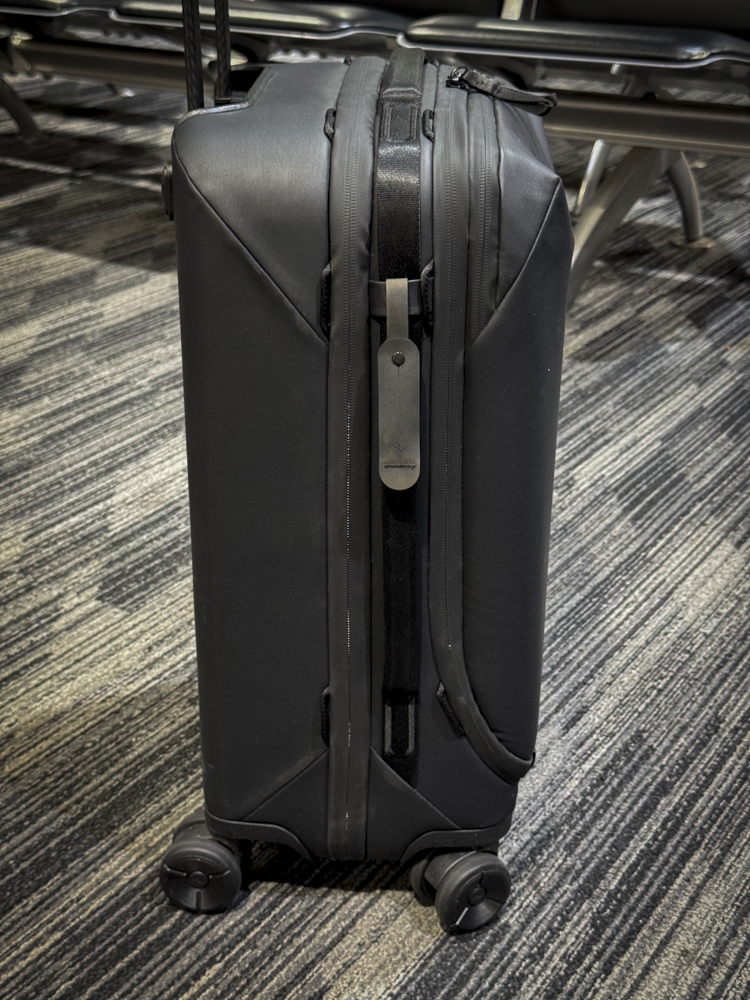
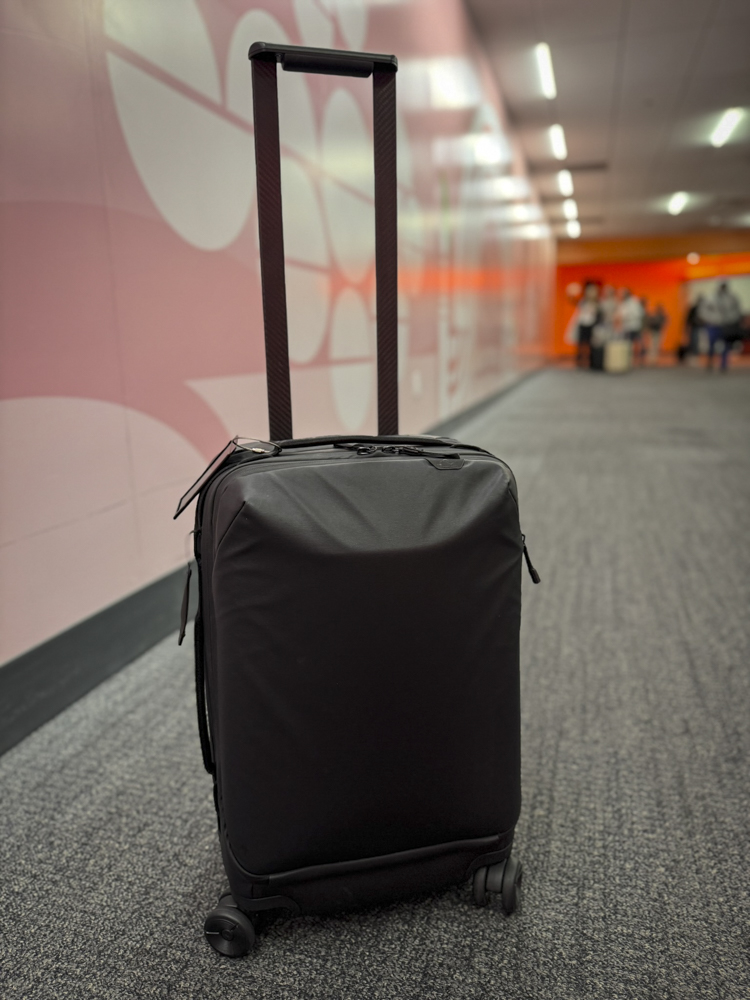
The Roller Pro comes with grab handles on all four sides – something that should be mandatory on travel bags. No matter how you’ve slid the thing into the overhead bin, between gear in the truck, or crammed it into the closet, there is always a handle present. Why doesn’t everyone do this with their bags? I don’t know. The handles are comfortably wide without bulking up the exterior, lying flat to the bag when not in use.
Around the exterior are a series of small loops that are flexible and low-profile lashing points for anything that needs to be attached to the exterior, whether it’s a jacket or a tripod. There are twelve in total, six arrayed around either side of the main compartment’s zipper. These loops are made of ultra-high molecular weight polyethylene, the same material most soft shackles used for vehicle recovery are made from, so they aren’t going anywhere. I only used them a handful of times, but they were great to have when I needed them.
Despite all the other unique design elements on the Roller Pro, my favorite part of the bag is the wheels. Peak Design paired oversized, 60mm wheels at all four corners, which makes traversing uneven pavement a much smoother experience than what I’m used to. The real magic, though, is whatever they’ve done with the internals. They are near frictionless and make the bag an absolute pleasure to use. You’ll find yourself giving it a little push and seeing just how far it will roll alongside you before it needs another nudge – it’s always farther than you’d expect.
My least favorite part of the bag is also the wheels. Those wheels and the dark magic from which they were forged give the bag a tendency to start rolling on its own when it’s on the slightest incline. It’s a quirk when the bag rolls across an old hotel room floor. It’s maddening when you find yourself chasing it down the street into traffic after a momentary distraction. You have to keep an eye on this bag like it’s a toddler that just chased their Halloween candy with four shots of espresso – it’s going to start moving at any second.
READ MORE: Travoca Rigel 35DZ Review: Dual-Zone Flexibility for the Modern Overlander
Interior
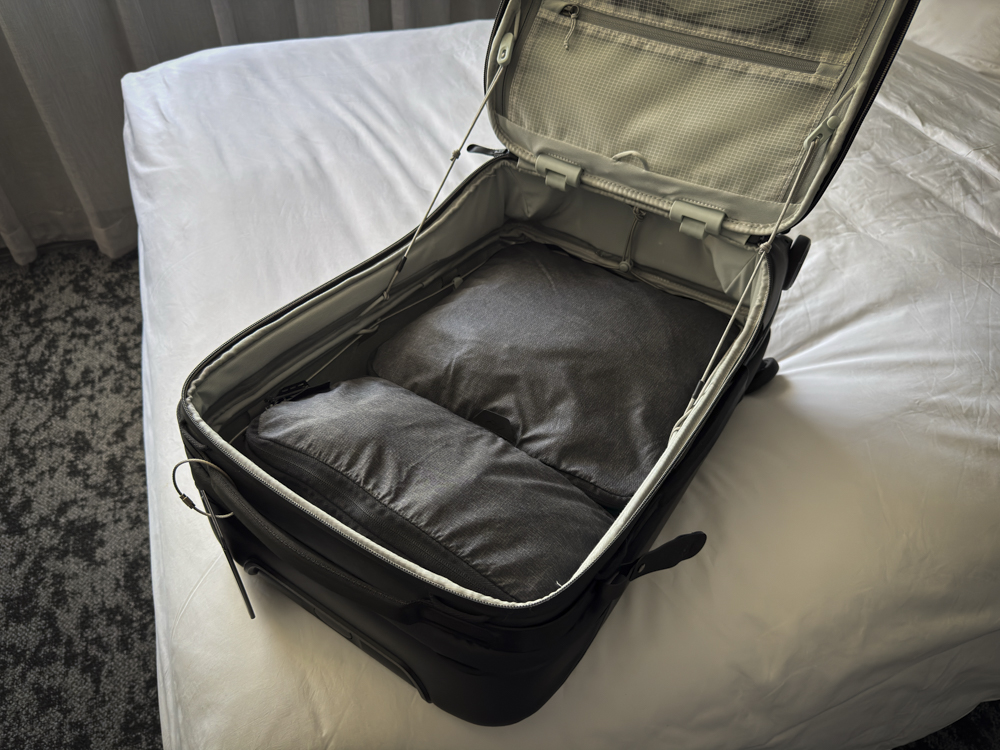
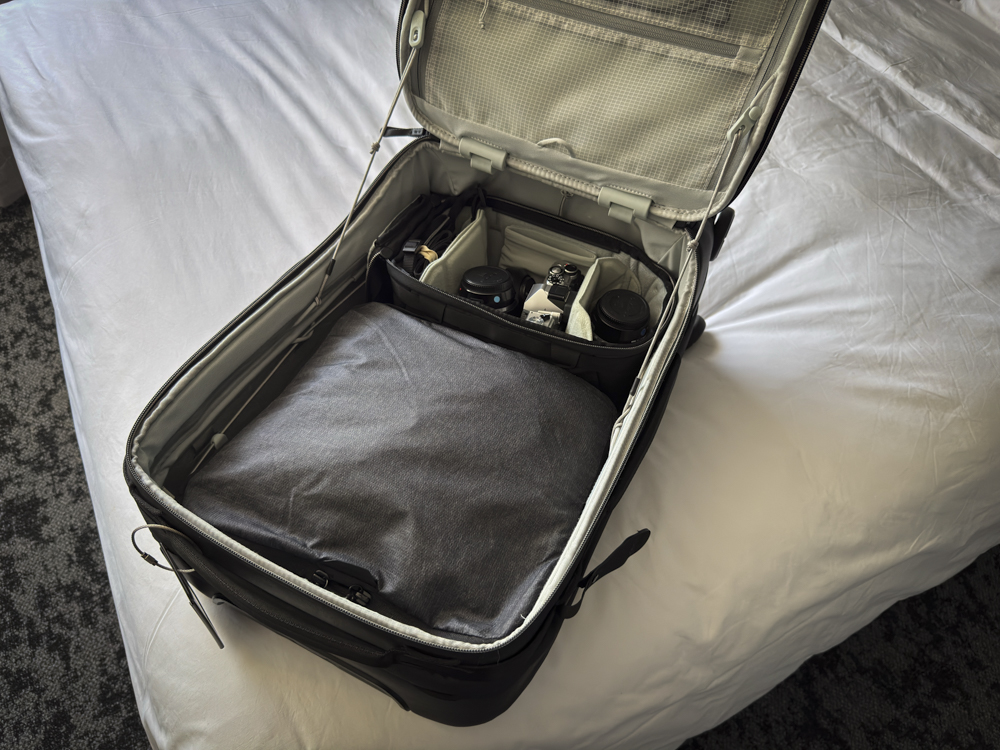
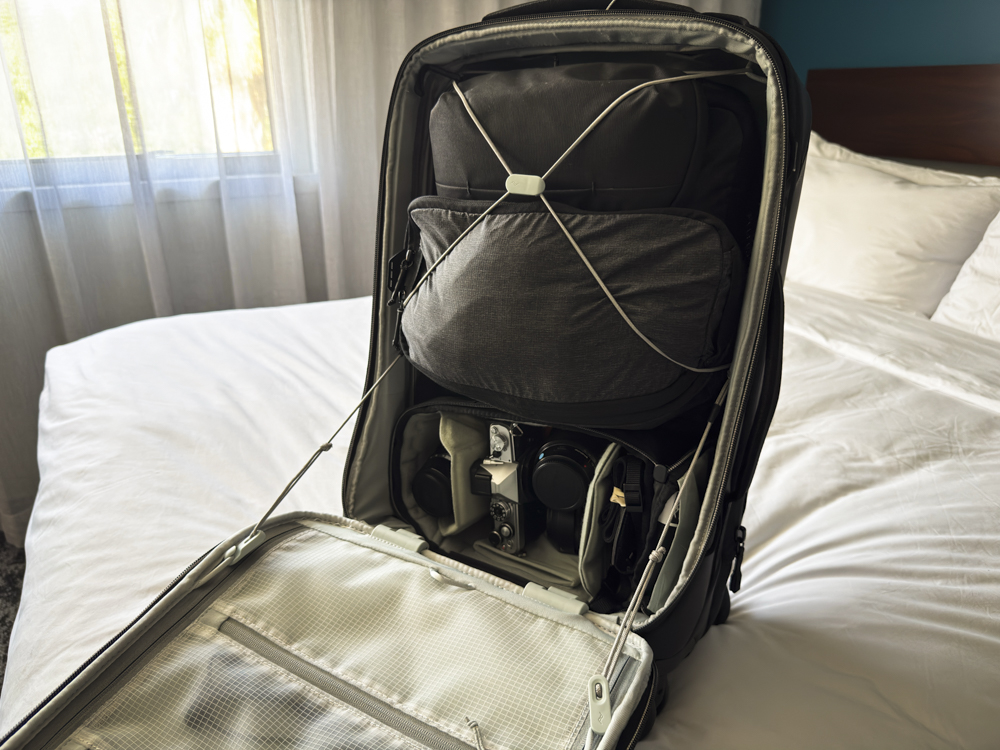
The interior is as thoughtfully redesigned as the exterior. Rather than opening like a book, which doubles the size of the bag when open, Peak Design chose to go a different direction with this, too. The opening to the bag has the hinges down near the wheels, with the top of the unit opening like a drawbridge. Opened to about ninety degrees, you can get full access to the interior as well as the organizational panel on the inside face of the door without taking up any additional space. This is a welcome feature in a cramped hotel room, rooftop tent, or while trying to access the bag in the back of a vehicle.
The interior is roomy for a rolling bag, with the absence of the usual trolley extension tubes taking up valuable and inconveniently shaped space at the bottom. Though present, the molding around the slim carbon fiber substitutions is slight. The interior is lined with a felt material reminiscent of an automotive headliner and is a welcome upgrade from the typical interior liners found in these types of bags. There are six cord loops festooned around the perimeter that allow you to attach camera cubes to the interior or serve as tie-down points. There is also an elastic cord that can act as a compression lashing and can be cinched down to accommodate the thickness of what’s packed inside.
The interior face of the “drawbridge” has four small, zippered organization pockets that, while useful, I found myself rarely using. Thankfully, the organization panel can be zipped down and stowed to open up additional room in the interior, helpful when overpacking or needing to cram a jacket or other bulky clothing in the bag. Hidden behind the panel are two secret pockets – one for hiding an AirTag-type tracker and another for storing a passport or two out of sight. Neither is obvious unless you know to look for them.
This space behind the organizational panel is shared with the laptop and easy-access pockets accessed from the exterior. The laptop compartment is well protected and holds up to a 16-inch laptop suspended in the bag. Behind the same exterior zip is a small, sectioned EDC pocket for stashing small items such as keys, chargers, and the like. Peak Design built a small magnet into the flap separating the two that snaps to the laptop side of the compartment and keeps your laptop from sliding out if you happen to drop the drawbridge while the bag is vertical. Thankfully, I never had to test that in real life.
Final Thoughts
You may be saying to yourself, that’s all great, but why are we talking about a roller bag on an overlanding-centered site? The truth is, most of us do a lot of traveling beyond just overlanding. I regularly travel for business, take family vacations, visit family out of town, head out on short weekend excursions, do photography trips, and yes, overland. One versatile bag that easily adapts to all these styles of travel makes packing for any kind of trip a simple task. Going on an extended trip, I grab my small packing cube and two medium packing cubes for all my clothes. For a trip, I want to bring a camera, or two, so I can omit the small packing cube and drop in a pre-packed small camera cube that fits two mirrorless bodies and a couple of lenses. If I’m going on a photography-centered trip (or god-forbid helping photograph a wedding), I can drop in the holds-everything-but-the-kitchen-sink XL camera cube, and the entire Roller Pro becomes an enormous camera case.
This versatility extends well to overland travel, where I can easily adapt its interior to the trip’s needs. Additionally, I really appreciate the high packing efficiency of a rectangular bag when going out. Nearly all of my overlanding gear has a rectangular form, and I pack the back of the truck like I’m playing Tetris – keeping everything on a single layer for first order retrievability and trying to interlock the shapes so nothing moves. The unique way the bag opens makes it easy to get to the contents in a cramped tent or in the back of an SUV, as long as you have a little overhead space for the drawbridge to open. Is it the ne plus ultra for overlanding-only travel? No, probably not. I will say that it is the best, most versatile travel bag I’ve owned.
At $599, this bag isn’t cheap, but it is priced well with the higher-end bags it competes with. If you travel a lot, find yourself needing both a photography bag and a travel bag, or just appreciate thoughtfully designed and well-made gear, this bag is well worth it. Pair it with some of Peak Design’s packing cubes and camera cubes (and perhaps some of their other travel organization gear), and you have a single system that can meet the vast majority of your travel needs for quite some time.
Specs
| Exterior Dimensions (normal, expanded) | 21.8″ x 14″ x 9″, 21.8″ x 14″ x 11″ |
| Capacity (normal, expanded) | 34L, 39L |
| Weight | 8.6 lbs. |
| Laptop Capacity | 16″ Mac Book Pro |
| Internal Shell | 70% recycled polycarbonate |
| Exterior | 100% recycled weather resistant Versa Shell 500D nylon, Bluesign approved |
| Zippers | #8 UltraZips with abrasion-resistant Ultra-high-molecular-weight polyethylene (UHMWPE) thread |
| Interior and Exterior Cording | Ultra high-strength UHMWPE |
| Warranty | Lifetime Guarantee |
| Price | $599.95 |