Building a vehicle for extended backcountry travel requires planning for a lot of variables like driving performance, comfort, and durability. We already looked at how the Ultimate Build performed off-road, but the other side of the coin is how well you can live out of the vehicle when you finally hit the campsite.
Over an eight-week stretch on the road with the 2026 Overland Expo Ultimate Build, I had the opportunity to put the Tune M1L Camper setup through nearly every weather condition the western US could throw at me: 103ºF heat in Moab, Utah, 30ºF nights in the Colorado mountains, and howling winds at a butte-top campsite in Oregon.
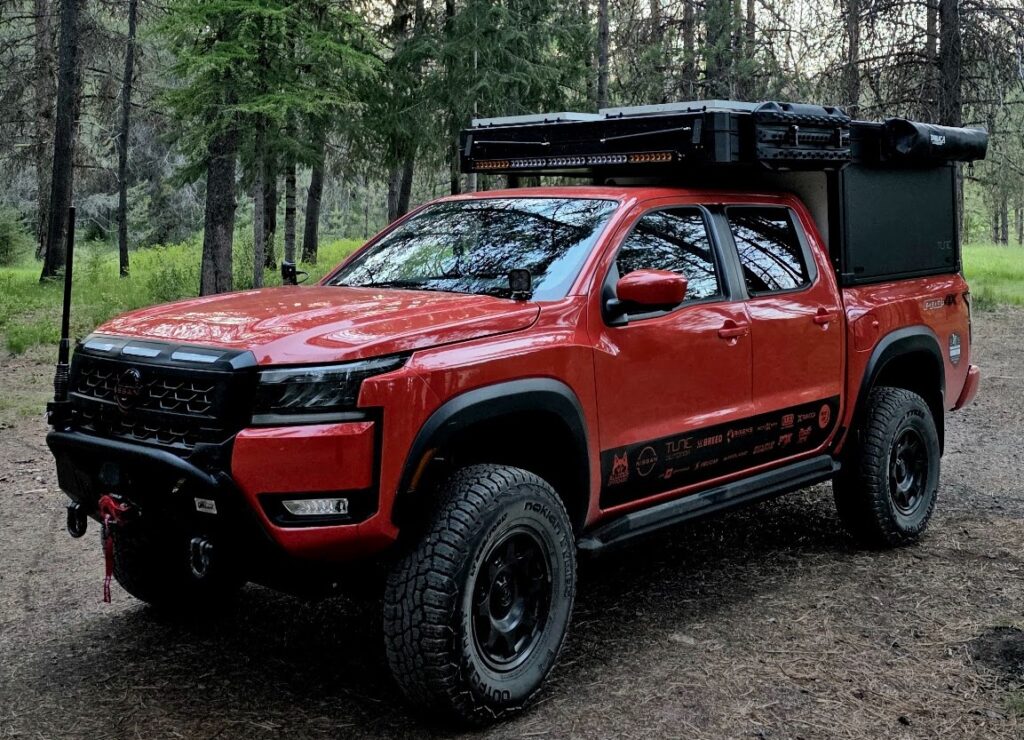
Photo by Anthony Sicola
Mounted to the bed of the Nissan Frontier PRO-4X, the Tune M1L Camper served as my home base as I traveled the West for events. Backed up by climate controls and a bomb-proof power ecosystem, this rig handled long-term travel seamlessly.
Hot Days and Freezing Nights
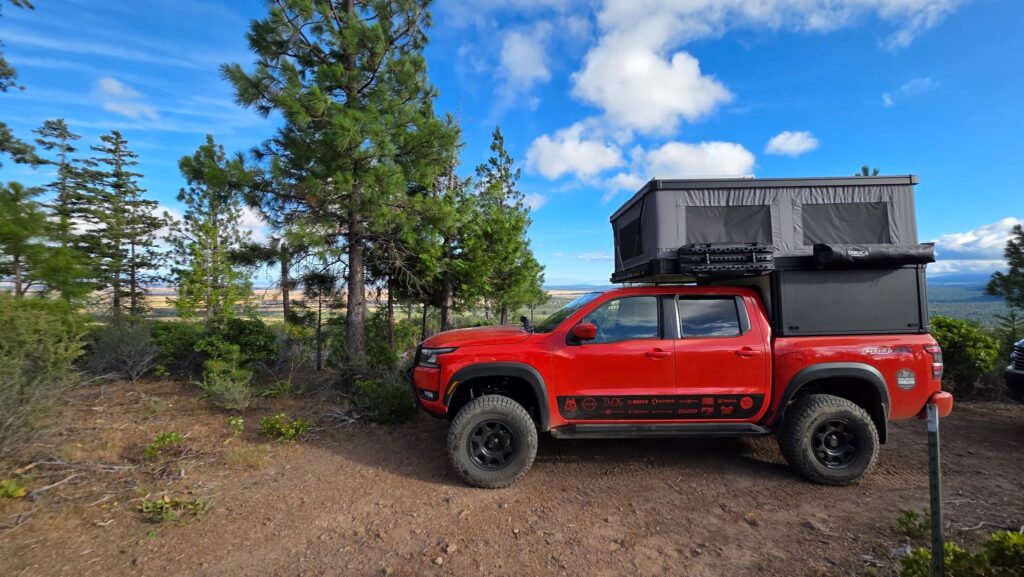
Photo by Anthony Sicola
When you’re moving between states, terrain, and elevations, your shelter has to adapt to the weather. It has to handle the cold one day and the heat the next.
On the way to Overland Expo WEST in Flagstaff, we ran headfirst into a wall of triple-digit heat in Moab. I dreaded sleeping in a stuffy camper, but I turned on the built-in MaxxAir fan once I had the Tune M1L Camper set up for the night, and I was pleasantly surprised by how quickly the fan cooled down the interior. I ran the fan on the HIGH setting, and it pulled in a continuous stream of air through the camper and kept the sleeping area from becoming a sauna. The fan kept the interior incredibly comfortable.
On the other end of the spectrum, we hit some cold conditions during stays at high elevation in Colorado and Oregon. Luckily, Rixen’s Enterprises provided us with an Eberspächer Airtronic diesel heater that delivered whisper-quiet, dry heat throughout the camper. Unlike propane heaters that push moist air into the living compartment, the Eberspächer kept the sleeping area incredibly dry and warm while using minimal fuel from the plumbed Rotopax diesel container. It was great to be able to turn the heater on for 30 minutes before going to bed to have a warm camper waiting for you.
On demand hot showers are a luxury that I’ve never experienced on the trail, and the Rixen’s Overland Shower made a huge difference after a couple of long and dusty trail days. Paired with the Taruca Shower Enclosure, setting up a much-needed shower only took about five minutes. I have to say that rinsing off sweat and dust before climbing into your sleeping bag for the night is something I could get used to quickly.
Quick Basecamp Setup and Shelter from the Elements
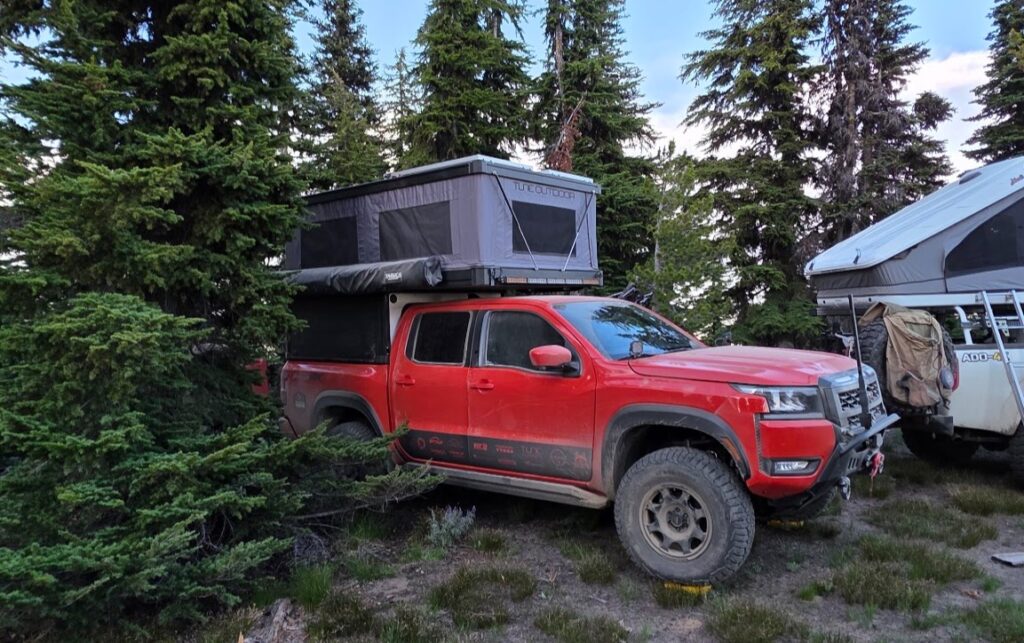
In this style of travel, we rarely stay in an area more than a day, so when you’re setting up or breaking camp that often, both speed and durability matter. The Tune M1L was super-simple to deploy. Just unlock four latches and lift the top. Camp is set up in less than five minutes.
For shade during the day at lunch stops or at camp in the afternoons, I used the Taruca Rogue XC 270º Awning. You typically need to be careful (or at least aware) of wind gusts while using an awning, but with Taruca’s heavy-duty trusses and Tune Camper’s solid mounting brackets, it held up easily in high winds. The awning features red, amber, and white LED lighting on the truss arms, making it nice to sit under in the evenings.
When it was time for bed, it was a joy to climb into the sleeping loft of the Tune M1L. Outfitted with a prototype Pittman Outdoors AirBed Mattress. The memory foam layer made a huge difference in sleep quality, eliminating the usual pressure points you get from thin mattresses and making the camper bed feel like my bed at home. For a firmer mattress, you can inflate the Pittman Mattress with an air pump to suit your needs.
Power When You Need It: The Electrical System
The electrical system operated flawlessly for the entire two-month stretch. As an experiment, I left the Travoca Rigel 60L Fridge Freezer on all the time, even when I wasn’t on the road, just to watch the battery usage. There was never an issue with needing power that we didn’t have, which is great when you’re managing frozen food like ice cream and ice as well as fresh foods and cold beverages for camp. The dual-zone Rigel was a workhorse.
Starting with the roof, we used two REDARC 120w Hard Solar Panels attached to the roof T-Track on the Tune M1L. We routed the Anderson connectors through a REDARC Scout25 Panel charging a single 100ah Lithium Ion (LiFePo4) battery from Battle Born Batteries. The alternator powered the battery during drive times, and the solar panels took over when I turned the engine off.
This solar and battery system powered the interior camper lighting, the MaxxAir fan, the Eberspächer Airtronic Heater, and I was able to charge cameras, laptops, and devices nightly without worrying about a dead battery in the morning or obsessively watching the battery monitor on the REDARC app, hoping I had enough power.
So, How Did it Go?
Living out of a vehicle off and on for two months quickly reveals every flaw in a build. By pairing the space efficiency of the Tune M1L camper with power from REDARC and Battle Born, plus real climate solutions from Eberspächer, Rixen’s, and Taruca, this Frontier proved it can handle extreme desert heat, sub-freezing mountain air, and everything in between.